01Three real Canva designs · built for this briefclick "Open in Canva" to verify
Infographic · 800×2000
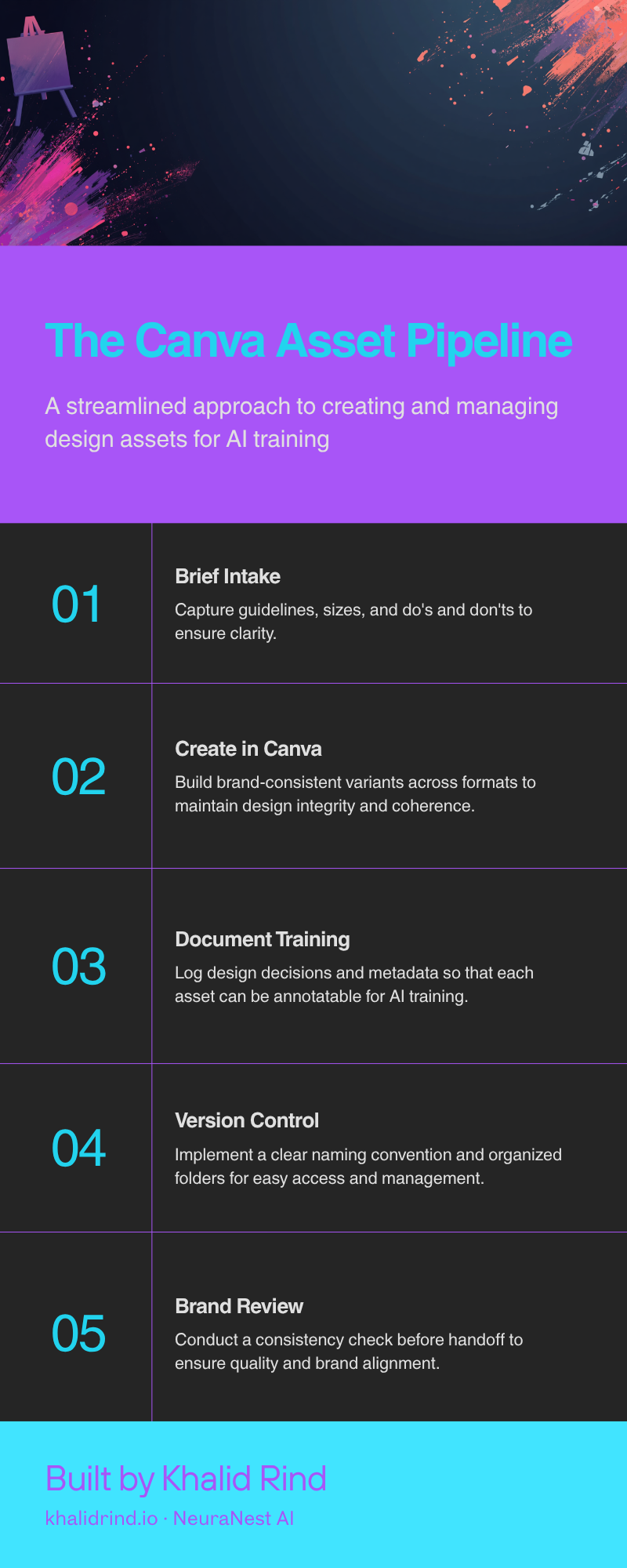
The Canva Asset Pipeline
An information design that doubles as the method for this role: brief intake → create in Canva → document for AI training → version control → brand review. Built in Canva, footer corrected by hand.
Open in Canva ↗
Poster · 1587×2245
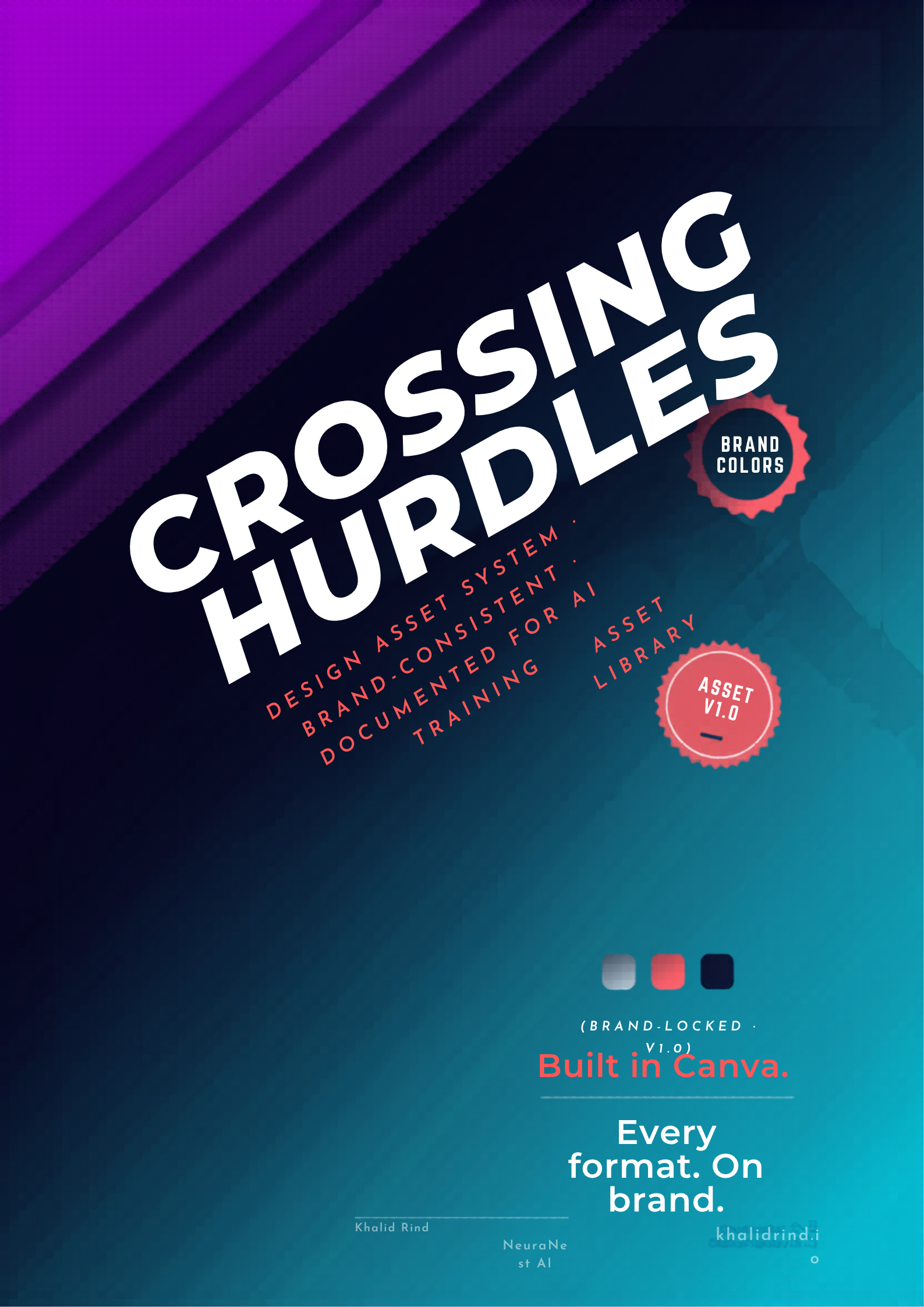
Design Asset System poster
A bold brand-consistent poster with a colour-swatch bar and version badge — demonstrating brand-system thinking. AI placeholder text was found and replaced with clean copy (the editing half of the job).
Open in Canva ↗
Social post · 1080×1350
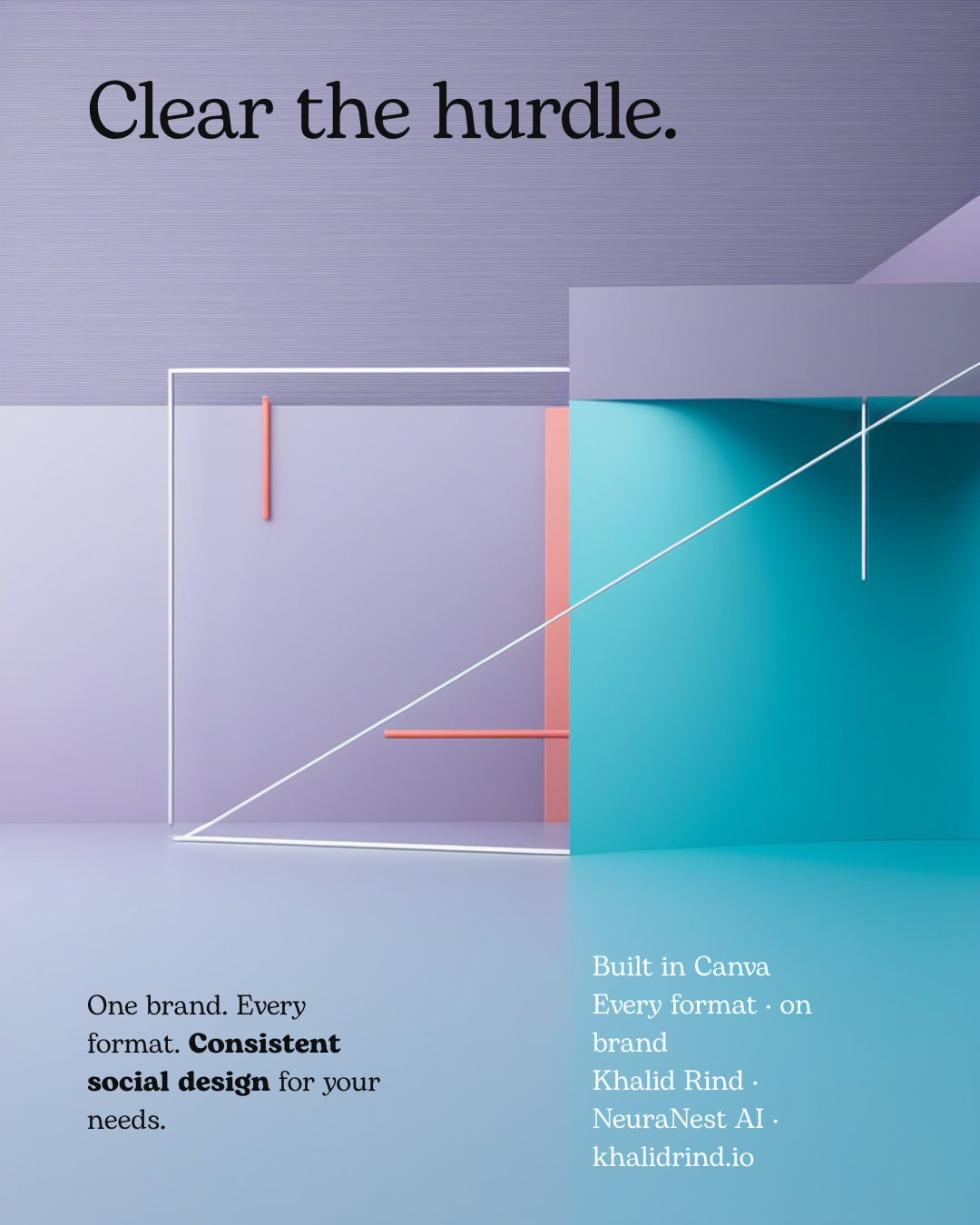
"Clear the hurdle" social asset
A clean, scroll-stopping 4:5 social post showing the same brand carried into another format — the "brand-consistent across formats" requirement, made visible. Placeholder address swapped for a credit line.
Open in Canva ↗
🎨 These are not mock-ups. Each design was generated, then opened in an editing session where I read every text layer, replaced AI placeholder text, and committed the changes — the exact create-then-edit-then-manage loop this role runs all day.